

You might think a small cavity can wait if it doesn’t hurt yet. Many people put off dental treatment because they feel fine, but at Montgomery Dental Centre we see patients every day who wish they had addressed their cavities sooner.
You shouldn’t let a cavity go untreated for very long. Even without symptoms, decay keeps moving, and many cavities can turn into much bigger issues within months to a few years. Getting them treated early helps prevent pain, infection, and the need for more advanced care.
What Happens When a Cavity Forms?
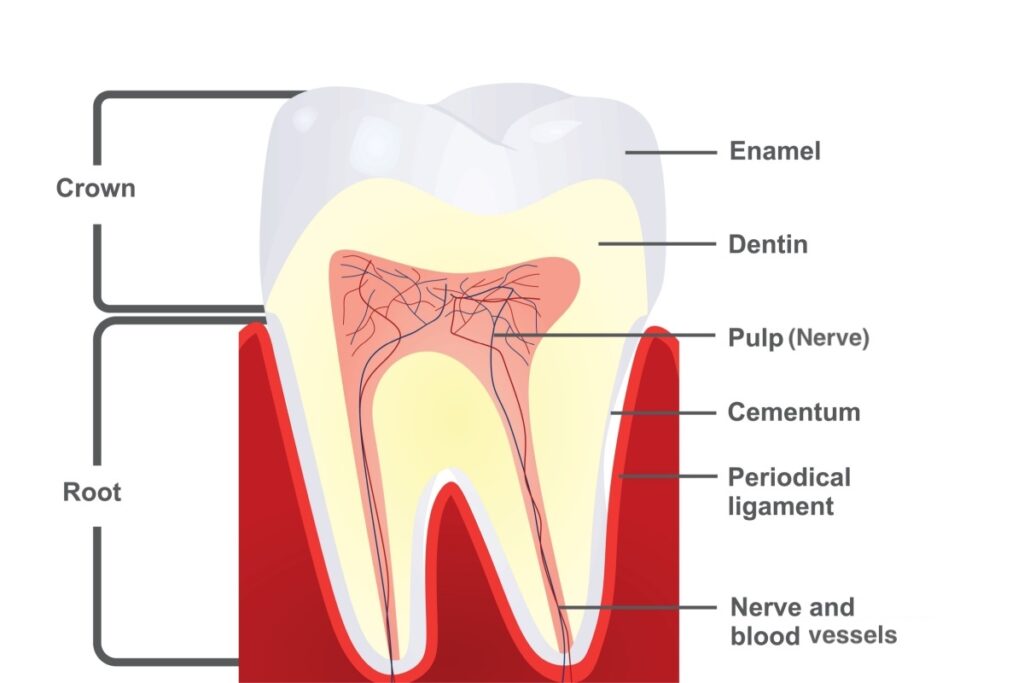
Your teeth have three main layers: the hard outer enamel, the softer middle dentin, and the inner pulp containing nerves and blood vessels. Bacteria in your mouth feed on sugars and starches from food, producing acids that attack your enamel.
This acid attack starts as a tiny weak spot in your tooth’s surface. You won’t feel anything at first because enamel has no nerve endings. The bacteria keep working, creating a small hole that grows deeper over time. Dental plaque provides the perfect environment for these bacteria to thrive and continue their destructive work.
How Fast Does a Cavity Progress?
Cavity growth depends on several factors including your age, how well you clean your teeth, what you eat, and how much saliva you produce. The location of the cavity also matters as teeth in the back of your mouth often decay faster because they’re harder to clean.
Decay through enamel can take months or even years, but once bacteria reach the dentin layer, the process speeds up dramatically. Children’s baby teeth and the root surfaces of adult teeth decay much faster than other areas. Regular dental exams help track cavity progression and catch problems early.
Stages of an Untreated Cavity
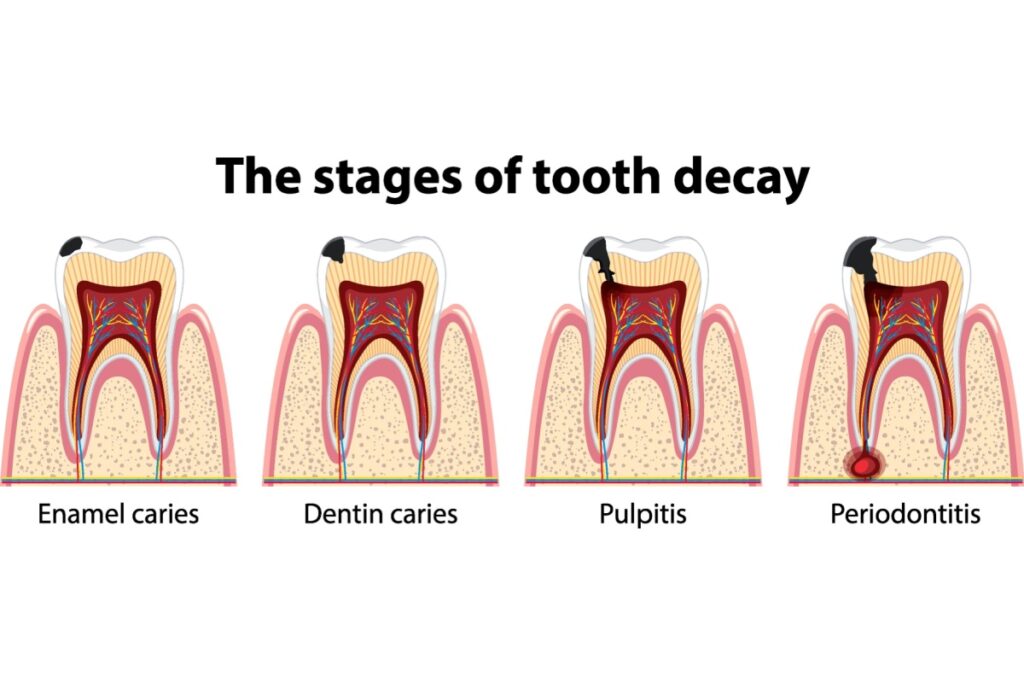
Stage 1: Enamel Decay (Early Stage)
You won’t feel pain during this stage because enamel contains no nerves. You might notice faint white or brown spots on your tooth, or slight sensitivity when eating something very cold or sweet. Fluoride treatments can sometimes reverse damage at this stage, but only if you catch it early enough.
Stage 2: Dentin Decay (Moderate Cavity)
Once bacteria reach the dentin, you’ll start noticing sensitivity to cold foods, sweets, or pressure when chewing. The cavity grows much faster now because dentin is softer than enamel. You can no longer reverse the damage, and your tooth needs a filling to stop further decay.
Stage 3: Pulp Involvement (Severe Cavity)
Bacteria have reached the nerve inside your tooth, causing sharp pain, throbbing, or sensitivity that lasts long after removing hot or cold foods. You might see swelling around the tooth or experience pain when biting down. Root canal treatment becomes necessary to save the tooth.
Stage 4: Abscess Formation (Advanced Infection)
The infection spreads beyond your tooth into surrounding gum and bone tissue. Your face may swell, you might develop a fever, and you could taste something foul in your mouth. This becomes a dental emergency requiring immediate antibiotics, root canal treatment, and potentially tooth extraction.
Stage 5: Tooth Loss
The tooth becomes so damaged that no treatment can save it. Extraction becomes your only option, leading to shifting of other teeth, possible bone loss in your jaw, and the need for implants or bridges to replace the missing tooth.
How Long Is Too Long to Wait?
Most cavities develop quietly for months or years before causing pain. Once decay reaches your dentin layer, it can progress to a root canal situation within six months to a year, depending on your specific circumstances.
Waiting until you feel pain means you’ve already missed the window for simple, less expensive treatment. Even a cavity that seems small during your dental exam can grow into a serious problem requiring complex procedures if you delay treatment. Professional dental examinations help detect problems before they become painful and expensive.
Risks of Leaving a Cavity Untreated
Delaying treatment means paying more money for more complicated procedures. A simple filling that costs a few hundred dollars (which is generally mostly or entirely covered by insurance) can become a root canal and crown costing thousands. Your tooth can also fracture or break, making treatment even more difficult.
Chronic infections from untreated cavities affect your ability to chew and speak properly. In rare cases, serious dental infections can spread to other parts of your body, creating life-threatening situations.
Cavities don’t heal themselves, and they only get worse over time. Early treatment remains easier, faster, and more affordable than waiting until you experience pain or swelling. If you notice tooth sensitivity, dark spots, or missed your routine cleaning, contact Montgomery Dental Centre to schedule an examination and protect your smile.