


Key Takeaways
- The temporomandibular joint connects your jawbone to your skull and works like a sliding hinge.
- Sore jaw muscles, face pain, and pain while chewing are common signs.
- Headaches, neck pain, and aching around the ear can show up too.
- Clicking without pain often needs no treatment.
- Habits like clenching and gum chewing, plus stress, injury, or arthritis, can play a role.
- A dental exam can help sort jaw pain from toothaches, sinus issues, or ear problems.
Why Jaw Pain Deserves a Closer Look
You wake up with a tight, tender jaw. Chewing your toast feels like work, and by mid-afternoon there’s a dull ache spreading toward your ear. Maybe your jaw clicks when you yawn in the car on the way to school drop-off. Montgomery Dental Centre hears about this kind of ache often, and a routine dental exam is usually where the answers start.
You may have a TMJ disorder if you notice ongoing jaw tenderness, face or ear pain, pain when chewing, clicking or grating sounds, or a jaw that feels stuck when you try to open or close it.
What TMJ Means & Why Your Jaw Joint Matters
You have two temporomandibular joints, one on each side of your head just in front of your ears, and each one connects your jawbone to your skull.
These joints act like sliding hinges. They let you chew dinner, talk on the phone, and laugh with your kids without a second thought.
A TMJ disorder affects the joint itself along with the muscles that move your jaw. That’s why the discomfort doesn’t always stay in one tidy spot.
Common Signs & Symptoms of TMJ Trouble
Jaw & Face Symptoms
The first hints usually show up close to the joint.
- A tender or sore jaw, especially on one side
- An aching pain across your face
- Pain while chewing, from steak to a crusty bagel
Symptoms Beyond the Jaw
Some signs seem unrelated to your mouth at all, which is part of what makes TMJ confusing.
- Headaches or neck pain
- Aching in or around the ear
- Tooth pain that shows up alongside jaw tenderness
Sounds & Limited Movement
Pay attention to how your jaw moves and what you hear when it does.
- Clicking or grating when you open your mouth
- A jaw that locks, making it hard to open or close
- Clicking with no pain, which often needs no treatment at all
What Causes TMJ Pain & What Sets It Off
The exact cause is often hard to pin down. That can feel frustrating when you just want an answer, but it also means small changes are worth trying.
Everyday habits can play a part. Clenching your teeth, chewing gum through your commute, or biting your nails during a stressful week all keep those jaw muscles working overtime.
Stress, an injury to the jaw, and arthritis are also linked to TMJ discomfort.
How to Check Your Jaw at Home
Simple Things to Notice
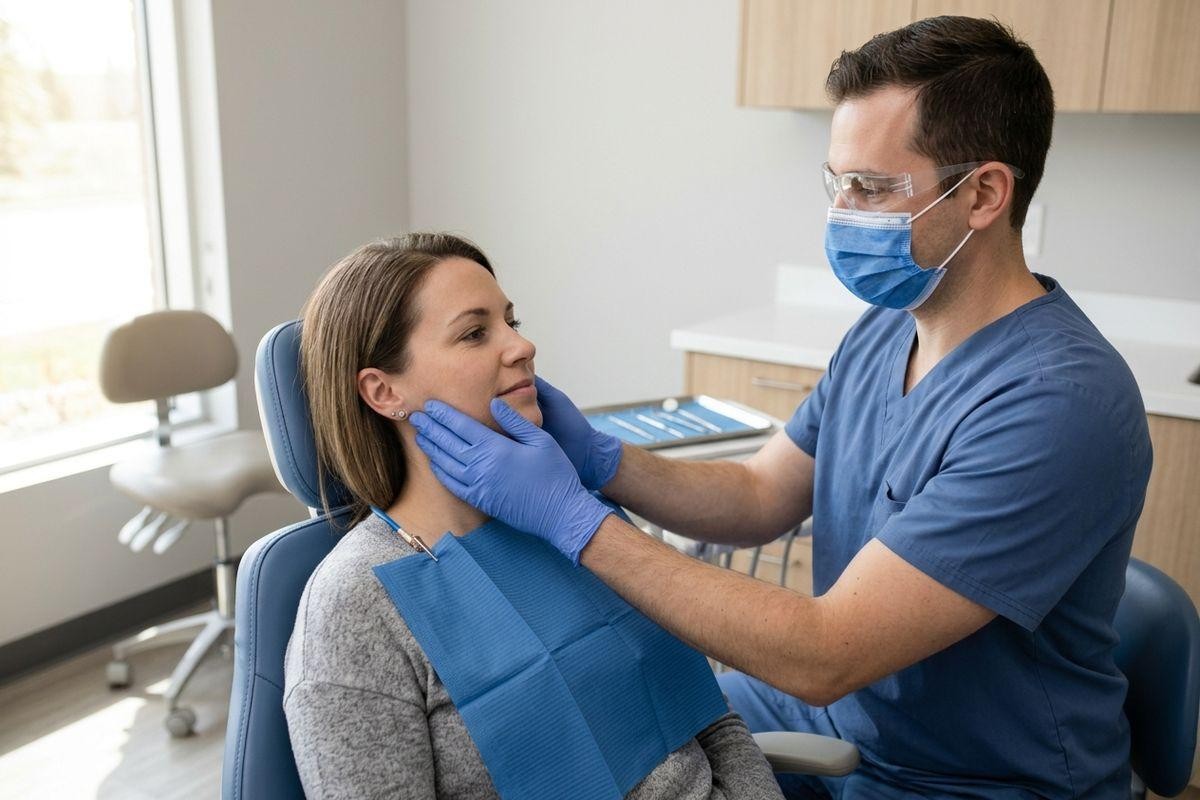
Place your fingertips just in front of each ear, press gently, and note any tenderness on one or both sides.
Then open and close your mouth slowly and listen. Any clicking, popping, or grating sound is useful information.
Keep track of stiffness too. If yawning feels limited or eating a sandwich leaves your jaw tired, write it down along with the time of day it happens.
Conditions That Can Feel Similar
Jaw pain has a few look-alikes. Toothaches, sinus issues, and ear problems can all create pressure and aching in the same area.
Tension headaches can also mimic the ache that comes with a tired jaw.
A dental exam helps sort it out. The team can look at your teeth, jaw movement, and tender spots together, so you’re not guessing about where the pain is coming from.
When to See a Calgary Dentist About TMJ
Signs Worth an Appointment
Book a visit if jaw pain or tenderness sticks around instead of settling down after a day or two. The same goes if you can’t open or close your jaw fully, or if the pain feels sudden and severe enough to count as a dental emergency.
What Care Can Look Like
Care often starts simple. Warm compresses and softer foods for a stretch can help calm sore muscles while you and the dentist watch how things respond.
From there, a custom mouth guard or jaw physical therapy may be suggested to help reduce strain. Surgery is considered after other options have been tried.
If your jaw has been sore for weeks, the team at Montgomery Dental Centre can examine your jaw, teeth, and bite, then talk through TMJ treatment options that fit your family’s routine. Call to book an exam and get a clearer answer about what’s behind the ache.