


Your gums do a lot of quiet work every day. They hold your teeth in place, protect the roots, and act as a barrier against bacteria. Most people don’t think about their gums until something feels wrong, but by then, the problem may already be progressing.
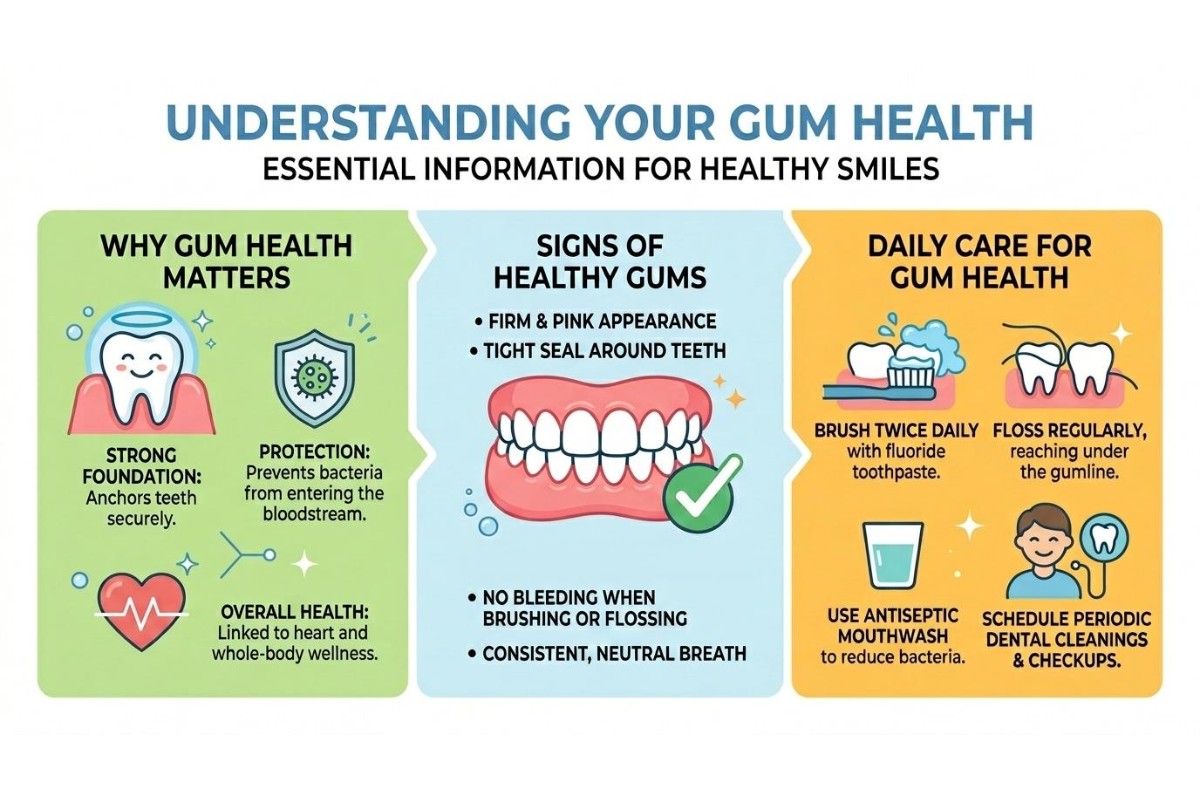
Healthy gums are pink, firm, and fit snugly around each tooth without bleeding, swelling, or pulling away. If that doesn’t quite describe what you’re seeing in the mirror, it’s worth taking a closer look at what your gums might be trying to tell you.
What Healthy Gums Look & Feel Like
Healthy gums sit tight against your teeth, with no gaps or puffiness around the edges. They feel firm when you press your tongue against them, not soft or spongy. When you brush or floss, you shouldn’t notice any blood or lingering soreness afterward.
It’s also worth noting that not everybody’s gum colour is the same. Some people naturally have darker pigmentation in their gum tissue, and that can be completely normal. What matters more is whether your gums look and feel consistent, with no sudden changes in colour, texture, or shape.
Signs Your Gums May Need Attention
Gum disease affects many Canadians, and the signs can be easy to miss at first. These changes often happen gradually, making them easy to miss if you aren’t paying close attention.
Visual Warning Signs
Pay attention to these visual cues that could indicate something is off:
- Red or swollen tissue: An early indicator of irritation or inflammation.
- Receding gums: Your gum line starts pulling back, making your teeth look longer than they used to.
- Visible pus: Spotting this near a tooth indicates a potential infection.
- Red bumps: Small bumps along the gum tissue need a professional evaluation.
Physical Warning Signs
Sometimes the signs are things you feel rather than see. If you notice any of these physical signs, don’t wait to have them checked out:
- Bleeding: Noticing blood when you brush or floss.
- Metallic taste: A persistent metallic taste in your mouth.
- Loose or shifting teeth: Teeth that feel loose or seem to have changed position.
- Persistent bad breath: Bad breath that remains after brushing points to bacteria building up below the gum line.
- Tooth sensitivity: Discomfort from hot, cold, or sweet foods often connects to gum recession, as exposed roots are sensitive.
How Gum Problems Progress Over Time
Gum disease doesn’t usually arrive all at once. The early stage, called gingivitis, causes redness and bleeding but hasn’t yet affected the bone or deeper tissue. At this stage, good home care and a professional cleaning can manage the inflammation and often reverse gingivitis before it progresses.
When you leave gingivitis untreated, it can advance into periodontitis. During this stage, the infection starts to affect the bone that holds your teeth in place. Treatment becomes more involved, and managing the condition takes more time. The tricky part is that gum disease develops slowly and quietly, meaning many people don’t notice it until it has already progressed.
Daily Habits That Support Gum Health
Your daily routine plays a huge role in maintaining your gum health. Small, consistent habits add up over time to protect your smile.
- Brush twice a day: Hold your toothbrush at a 45-degree angle toward the gum line so the bristles can clean along and just below it. Proper technique makes a noticeable difference in removing plaque.
- Replace your toothbrush: Swap it out every 3 months, or sooner if the bristles start to fan out.
- Floss first: We recommend flossing before you brush. When you floss first, your toothbrush and toothpaste sweep away the loosened debris. If you brush first, that debris can just sit on your teeth.
- Mouthwash, when recommended: Rinsing can help reduce plaque in spots your brush and floss don’t fully reach.
- Dietary choices: Cutting back on sugary foods and processed carbohydrates helps. Bacteria in your mouth feed on sugar and produce acids that irritate gum tissue.
- Avoid smoking: Smoking puts gum tissue at significant risk. It reduces blood flow to the gums, slows healing, and makes it harder to spot early signs of infection. Cutting it out supports your gum health in a meaningful way.
When to See a Dentist About Your Gums
Any pain, swelling, or bleeding that sticks around for more than a week or two is worth getting checked. Even if it turns out to be minor, diagnosing a gum issue early means the treatment is usually simpler and more comfortable than waiting for it to develop further.
Regular check-ups give your dental team a chance to spot changes in your gums before you notice them yourself. Recall exams may include X-rays and a professional exam that can reveal what’s happening below the surface, where daily brushing and flossing can’t reach.
Partnering for Your Oral Health
At Montgomery Dental Centre, our team takes a patient-focused, holistic approach to your gum health. We partner with you to stay on top of small concerns before they become bigger issues, prioritizing your long-term wellness. If it’s been a while since your last visit, or if something just doesn’t feel right, contact us today to book an appointment and take the next step toward a healthy, lasting smile.