


Key Takeaways
- Persistent tooth pain or lingering sensitivity to hot and cold can signal a damaged or infected tooth pulp.
- Visual signs like swollen gums, dark spots, or small bumps near a tooth are worth getting checked.
- Some infections cause no pain at all and are only caught through X-rays.
- A Calgary dentist can confirm whether a root canal is needed through an exam and imaging.
- Regular dental visits help catch these problems before they become more involved to treat.
What a Root Canal Actually Does
You’ve probably heard the words “root canal” and felt a little uneasy. It has a reputation for being scary, but most people are surprised by how much relief it brings. The procedure removes infected or damaged pulp from inside the tooth, cleans out the affected area, and seals the tooth so it can stay in your mouth and keep working.
A root canal doesn’t just manage the pain. It removes the source of the infection and gives your natural tooth a chance to stay intact. Losing a tooth comes with its own set of complications, so saving it whenever possible is the goal. Montgomery Dental Centre helps Calgary families understand when a root canal is the right call. Knowing the signs that point toward a root canal treatment can help you get care sooner rather than later.
Pain & Sensitivity Signs to Watch For
Tooth Pain That Won’t Go Away
Some tooth pain fades quickly. This kind doesn’t. If you feel a sharp, deep ache when you bite down or chew, or if the pain comes and goes without any obvious trigger, that can be a sign something is wrong inside the tooth.
- Severe pain when chewing or putting pressure on the tooth
- Pain that starts on its own, without eating, drinking, or touching the area
Occasional sensitivity is one thing. Pain that keeps coming back, or that wakes you up at night, is a different situation entirely.
Hot & Cold Sensitivity
It’s normal for teeth to react briefly to something cold or hot. What’s not normal is when that reaction lingers. If you take a sip of hot coffee or bite into something cold and the pain stays for 30 seconds or longer after the temperature is gone, that’s a sign the nerve inside the tooth may be affected. Tooth sensitivity that goes deeper than the surface is worth paying attention to.
- Sensitivity that sticks around well after the food or drink is finished
- Pain from temperature that feels deeper in the tooth, not just on the surface
Visual Signs Your Tooth May Be Infected
Changes Around Your Gums
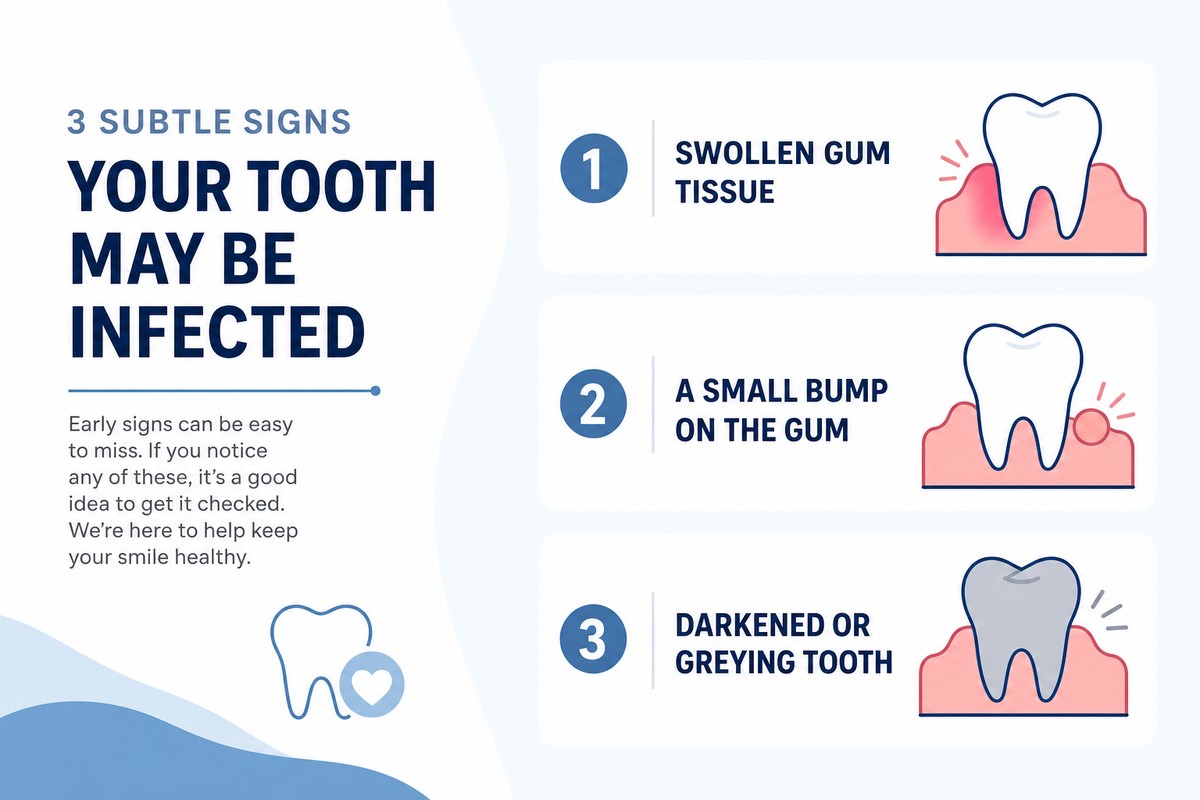
Your gums can show signs of infection before you even feel pain. If the tissue around one tooth looks puffy, feels tender when you press it, or if you notice a small raised bump that looks like a pimple sitting on the gum, those are signs worth taking seriously. Healthy gums fit snugly around teeth and don’t swell or form bumps near a single tooth without reason.
- Swollen or tender gum tissue concentrated near one tooth
- Small bumps or pimple-like spots on the gum surface
That bump on the gum can be a sign of a draining dental abscess. It can release pressure from the infection, which might make the pain come and go, but the infection itself is still there.
Darkening or Damage to the Tooth
A tooth that has gone grey or noticeably darker than those around it may have internal damage. This kind of discolouration often happens when the pulp inside the tooth is dying or already dead.
- A tooth turning darker or greying compared to neighbouring teeth
- Visible cracks, chips, or decay that reach deep into the tooth
What a Silent Tooth Infection Looks Like
Here’s the part that surprises a lot of people. Sometimes a tooth infection causes no pain at all. An infection may still be present and can continue affecting the tooth or surrounding bone. You might not feel anything out of the ordinary.
- No pain, but infection is still present and active inside the tooth
- An abscess that only shows up on dental X-rays, with no visible symptoms
- Mild swelling in the jaw or face near the affected tooth
This is one of the reasons regular dental check-ups matter so much. A dentist can often spot signs that are not obvious at home. Dental exams and cleanings give your dental team a chance to catch these silent infections before they spread.
How a Calgary Dentist Can Help
How the Dentist Confirms You Need a Root Canal
You can’t diagnose yourself from a list of symptoms alone. A dentist will do a physical exam, take X-rays, and look for signs of abscess, decay, or pulp damage. That information helps confirm whether a root canal is the right path or whether something else is going on. Dental recall exams are one of the most straightforward ways to stay ahead of problems like these.
- A physical exam checks for tenderness, visible damage, and gum changes
- X-rays show infection, bone loss, or abscess that can’t be seen from the outside
Keep Your Teeth Healthy Going Forward
Floss before you brush so that debris gets swept away by your toothbrush and toothpaste, not left sitting on your teeth. Brush twice a day, and keep up with your regular dental appointments. These habits help catch small problems before they turn into something that needs more involved treatment. The connection between daily oral hygiene and long-term tooth health is well supported, and consistent habits make a real difference over time.
The team at Montgomery Dental Centre is here to help Calgary families take care of their teeth at every stage. If any of these signs sound familiar, book an appointment with Montgomery Dental Centre. A dental exam can help confirm what’s causing your symptoms and whether root canal treatment is the right next step.