


Key Takeaways
- Grinding and clenching overwork your jaw muscles, which can leave them sore.
- Jaw pain from grinding often shows up in the morning.
- Tired muscles, clicking when you open wide, and aching temples are common signs.
- Stress, caffeine, alcohol, smoking, some medications, and family history can play a role.
- TMJ issues and tension headaches can feel similar to grinding pain.
- A dental exam, a custom night guard, and daytime habit awareness can help.
Morning Jaw Soreness & What It Might Mean
You wake up, take a sip of coffee, and your jaw feels tight, almost like you spent the night chewing gum. By mid-morning the ache spreads toward your temples. Nothing happened yesterday to explain it.
At Montgomery Dental Centre, an exam can help determine whether morning jaw soreness is related to grinding or clenching. Teeth grinding can cause jaw pain because grinding and clenching keep your jaw muscles working for hours while you sleep. Many people grind at night without knowing it, and the soreness is often the first clue.
The Link Between Teeth Grinding & Sore Jaws
Your jaw muscles are built for chewing meals, not for hours of steady pressure. When you clench or slide your teeth back and forth through the night, those muscles stay switched on far longer than usual.
That’s why the pain tends to be the worst right after you wake up and eases as the day goes on.
Since it happens while you’re asleep, you may never notice the habit itself. A partner who hears the sound or a dentist who spots wear on your teeth often notices it first.
What Jaw Pain From Grinding Feels Like
The feeling isn’t always sharp. More often it’s a heavy, worn-out sensation, like your jaw needs a break before you’ve even eaten breakfast.
- Tired, tight, or stiff jaw muscles
- Clicking or popping when you open wide
- A dull ache near your temples, ears, or neck
Other Signs to Watch For
Your teeth can show the story too. Front teeth may look flattened, edges may chip, and some teeth may feel sensitive when you drink something cold. Worn enamel is something a dentist can spot during a routine exam, sometimes before you feel anything at all. Interrupted sleep, for you or the person beside you, is another signal worth mentioning.
Signs in Kids
Grinding is common in childhood and often fades as kids get older. Many children do it during sleep without realizing it, and occasional grinding is not always a sign that something is wrong. Mention it at their next dental visit if it happens regularly, sounds forceful, or comes with morning jaw soreness, headaches, tooth sensitivity, or visible wear. Your dentist can check for signs of wear and ask about sleep, discomfort, and other symptoms before deciding whether follow-up is needed.
Common Causes of Teeth Grinding
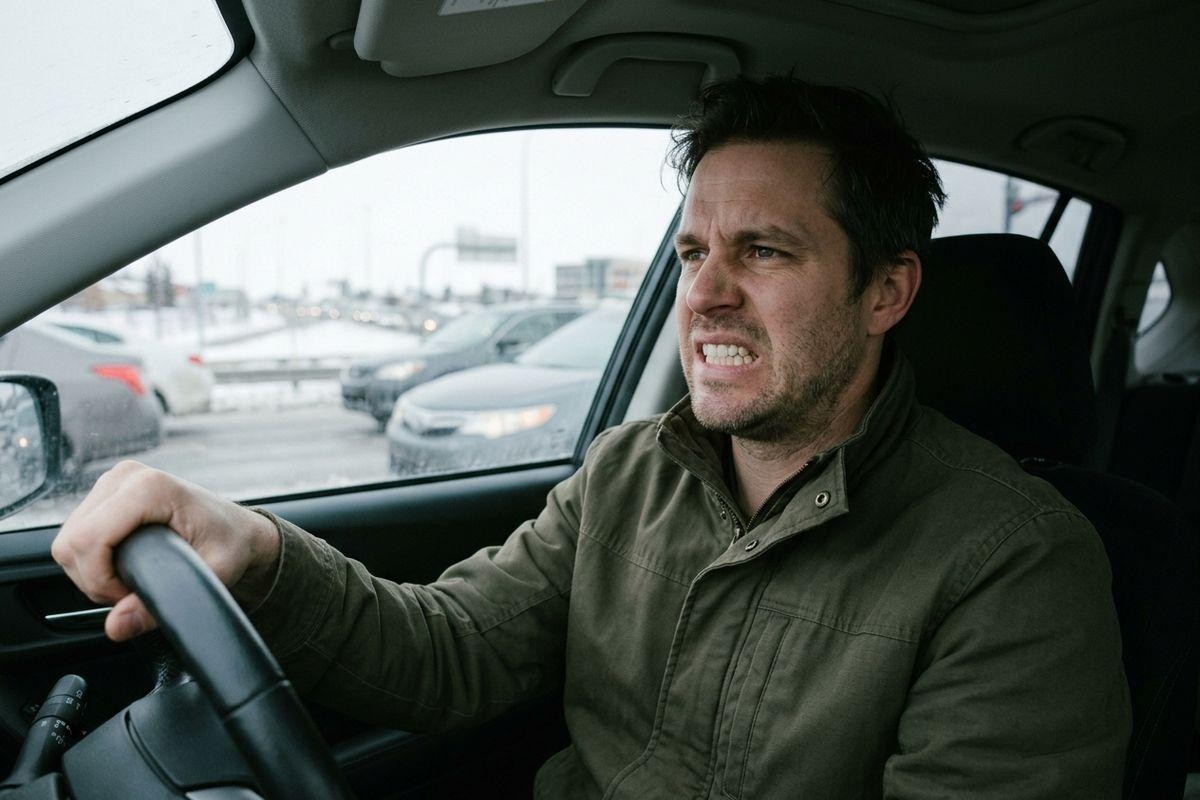
There’s rarely one single reason. Stress, anger, or deep concentration can all show up as a clenched jaw, and you may catch yourself doing it while answering emails or driving in traffic.
Other things can be involved as well.
- Caffeine, alcohol, and smoking
- Certain medications
- Family history
- Sleep-related conditions
Conditions Sometimes Connected to Grinding
Sleep-related breathing problems and teeth grinding can occur together, but one does not necessarily cause the other. If you notice regular snoring or pauses in breathing, mention them to your dentist along with the grinding. Your dentist can ask about the pattern and recommend next steps if a separate sleep assessment may be useful. Other sleep or health concerns may also be relevant during an assessment.
What Can Be Mistaken for Teeth Grinding
Not every sore jaw comes from grinding. Problems involving the temporomandibular joint (TMJ) are often grouped under temporomandibular disorders (TMD), and they can cause aches that feel very similar.
Ear pain can feel similar when the discomfort is actually coming from the jaw area nearby. If your ear seems fine but the pain continues, mention it during your dental exam.
Tension headaches can also come from sources that have nothing to do with your teeth. Sorting out the difference is part of what an exam is for.
How to Ease Jaw Pain & Protect Your Teeth
A few practical steps can take some pressure off your jaw.
- Book a dental exam so tooth wear can be checked and measured.
- Ask whether a custom night guard could help protect your teeth while you sleep.
- Notice daytime clenching and add stress relief that fits your routine, like a short walk or a few slow breaths before bed.
Options a Dentist May Discuss
Depending on what the exam shows, a dentist may discuss TMJ treatment, including options such as a custom night guard or Botox injections. If teeth are already worn, crowns or fillings can rebuild the damaged surfaces.
What Happens Without Treatment
Left alone, grinding can lead to more tooth wear, small cracks, and damage to existing dental work like crowns or fillings. Jaw and facial soreness can also stick around longer than it needs to.
Next Steps for Your Jaw & Your Smile
If you’re waking up with a tight jaw or you’ve noticed your teeth looking shorter than they used to, an exam can help assess the cause and discuss next steps with our team at Montgomery Dental Centre.
Call or book an exam online and bring your questions with you.